
Food facts
Facts About Fibre: Boost Satiety and Improve Digestion
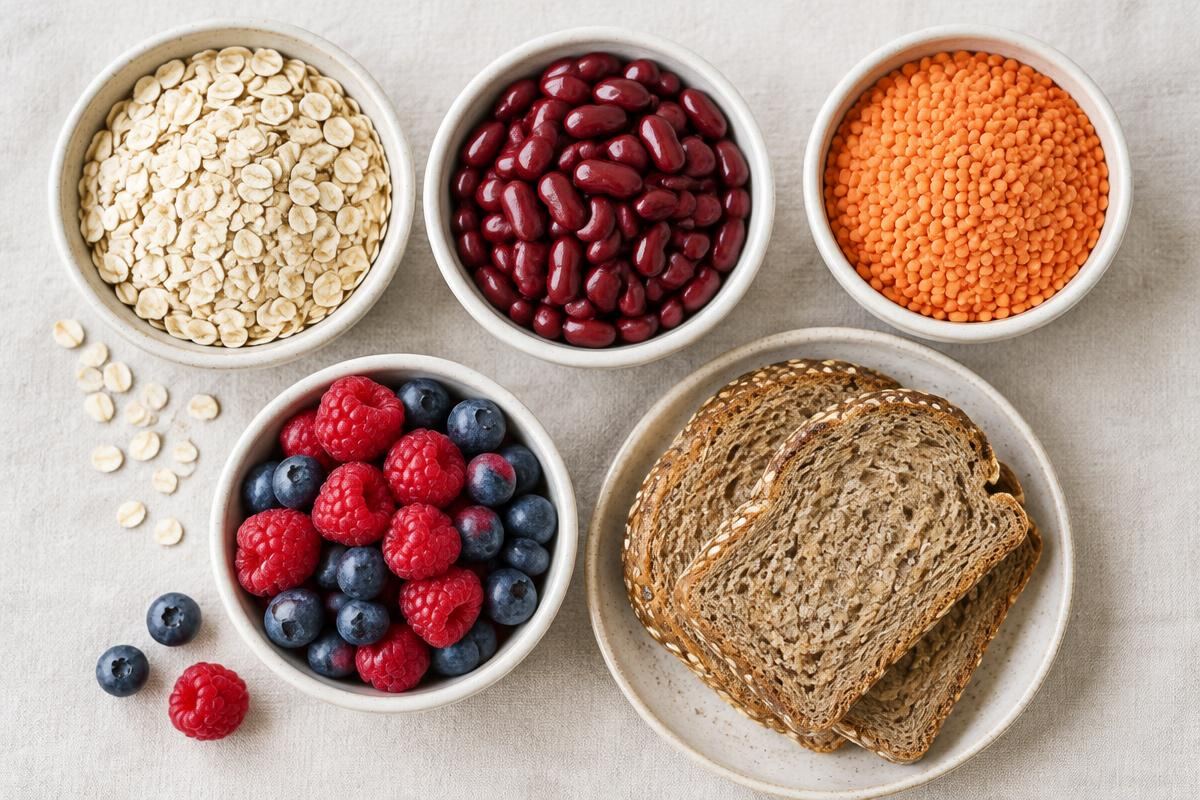
Fibre adds bulk to food, slows digestion and helps you feel full on fewer calories. UK guidelines recommend 30g a day for adults, yet most of us eat around 20g. Wholegrains, beans, lentils, vegetables, fruit with skin, nuts and seeds are the easiest ways to close the gap.
Last reviewed:
Why fibre helps with slimming
- It takes up room in the stomach and slows emptying, so you feel full for longer.
- It slows the release of sugar into the blood, reducing energy dips.
- High-fibre foods usually need more chewing, which slows eating.
- It feeds beneficial gut bacteria and keeps you regular.
High-fibre cupboard staples
| Food | Typical portion | Fibre (approx.) |
|---|---|---|
| Baked beans | Half a 400g tin | 7g |
| Red lentils (cooked) | 3 tbsp / 120g | 4g |
| Porridge oats | 40g | 4g |
| Wholemeal bread | 2 medium slices | 5g |
| Jacket potato with skin | Medium (180g) | 4g |
| Raspberries | 80g | 5g |
| Pear with skin | 1 medium | 5g |
| Almonds | 20g | 2.5g |
Easy ways to reach 30g a day
- Swap white bread, pasta and rice for wholegrain.
- Start the day with porridge or a high-fibre cereal.
- Add a tin of beans or lentils to soups, stews and curries.
- Keep the skins on potatoes and fruit.
- Snack on fruit, vegetable sticks or a small handful of nuts.
Keep reading
A new free meal plan every Monday
Balanced UK menus with a matching shopping list, published here on the site. Look back at previous weeks any time.
See this week's plan