
Food facts
Food Facts: What Really Belongs in a Slimming Diet
No single food makes you gain or lose weight — total energy over time does. But some foods make a calorie deficit far easier to stick to. Fill half your plate with vegetables, a quarter with lean protein and a quarter with wholegrain or starchy carbohydrates, and use fats sparingly.
Last reviewed:
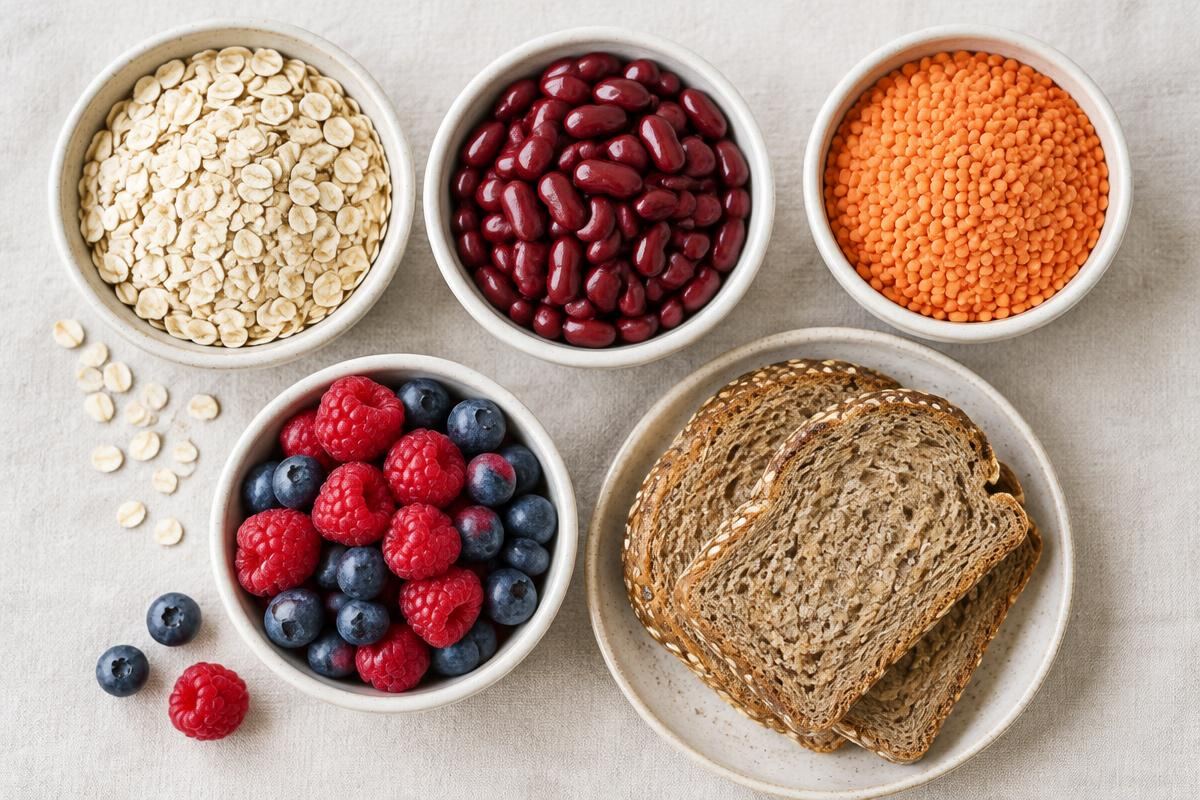
The macronutrients at a glance
Every food is made up of some mix of protein, carbohydrate and fat (plus alcohol, if you drink). They differ in energy per gram:
| Nutrient | kcal per gram | Slimming role |
|---|---|---|
| Protein | 4 | Most filling; helps preserve muscle |
| Carbohydrate | 4 | Main energy source; choose high-fibre types |
| Fibre | 2 | Adds bulk, slows digestion, supports gut health |
| Alcohol | 7 | Provides energy but no nutrients; lowers resolve |
| Fat | 9 | Essential in small amounts; very energy-dense |
Fats: smaller portions, better types
Fat isn't the enemy, but at 9kcal per gram a heavy pour of oil can add 100–200kcal to a meal without you noticing. Measure oil with a spoon or use a spray, and favour unsaturated fats such as olive and rapeseed oil, nuts and oily fish.
The NHS advises keeping saturated fat (butter, fatty meat, pastry, cream) to no more than 30g a day for men and 20g for women.
Carbohydrates are not the problem
Bread, rice, pasta and potatoes have been unfairly blamed for weight gain. It is usually what we add to them — butter, cheese sauce, frying — that piles on the calories. Wholegrain versions provide more fibre and keep you full for longer.
Read more in why potatoes and carbohydrates aren't the enemy.
Protein for fullness
Including a source of protein at every meal — eggs, Greek yoghurt, chicken, fish, tofu, beans or lentils — is one of the simplest ways to feel satisfied on fewer calories.
Vegetables, fruit, beans and pulses
These are the backbone of any slimming diet: high in water and fibre, low in energy density. Frozen and tinned (in water or juice) count just as much as fresh. Aim for at least five portions of fruit and vegetables a day; beans and pulses count as one portion however much you eat.
Find out why fibre matters in our facts about fibre guide.
Common myths, quickly busted
- 'Eating after 8pm makes you fat.' Total intake matters more than the clock, though late snacking is often where extra calories creep in.
- 'Detox teas burn fat.' Your liver and kidneys handle detoxing. Most 'detox' products are laxatives or diuretics.
- 'Low-fat always means low-calorie.' Some low-fat products replace fat with sugar. Check the kcal per portion on the label.
- 'You must cut out sugar entirely.' Reducing free sugars helps, but an occasional treat can fit — see our treats under 100 calories.
In this section
Keep reading
A new free meal plan every Monday
Balanced UK menus with a matching shopping list, published here on the site. Look back at previous weeks any time.
See this week's plan